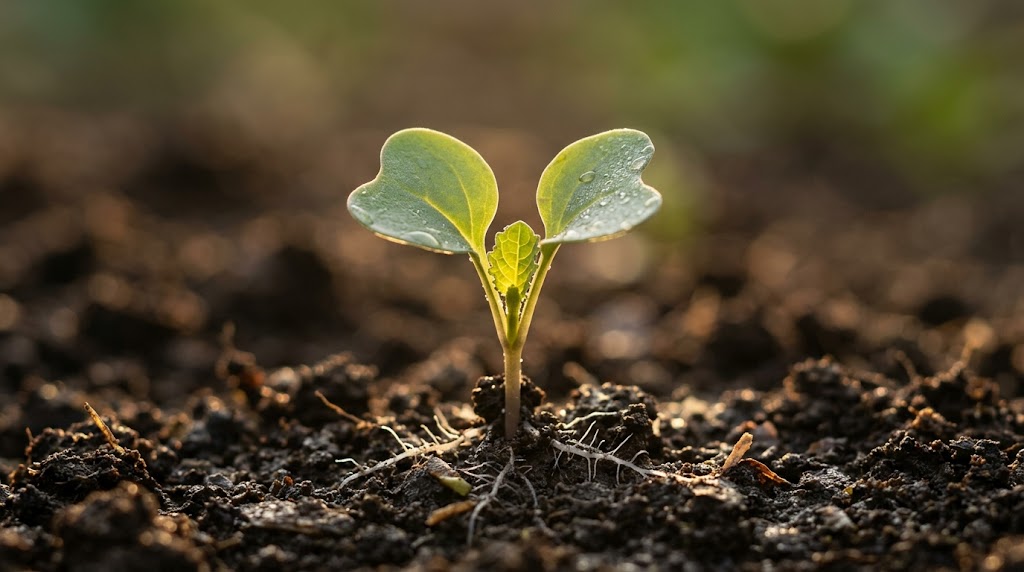
Your body already has a defense system built into every cell. Not a passive barrier, but an active, gene-driven program that produces detoxification enzymes, recycles antioxidants, pumps toxins out, and repairs damaged proteins. Over 200 protective genes, all encoded in your DNA, all waiting to be switched on.
The switch has a name: Nrf2. And understanding how it works changes the way you think about protecting your health.
What Is Nrf2?
Nrf2 (Nuclear factor erythroid 2-related factor 2) is a transcription factor that acts as the master regulator of your body's cellular defense system. When activated, it switches on more than 200 cytoprotective genes, triggering the production of detoxification enzymes, antioxidant proteins, and anti-inflammatory signals. It is the cell's built-in response to oxidative stress, environmental toxins, and chemical insults.
That is a lot of biology in one paragraph. Let's break it down in plain terms.
A transcription factor is a protein that tells your DNA which genes to turn on. Think of your genome as a massive library. Nrf2 does not browse the shelves and pick individual titles. It switches on the lights in an entire section at once: the section labeled "cellular defense." Every gene in that section with the right activation sequence gets turned on together. The result is a coordinated wave of protection: enzymes that neutralize reactive oxygen species, enzymes that convert fat-soluble toxins into water-soluble compounds your body can flush through urine, and transporters that physically pump harmful chemicals out of your cells.
The scope of Nrf2's influence is remarkable. According to a comprehensive review by He et al. (2020), Nrf2 controls the expression of 3-5% of all cellular proteins. That includes not just antioxidant enzymes, but genes involved in metabolic regulation, mitochondrial function, protein quality control, and immune modulation. Cells with active Nrf2 exhibit higher oxygen consumption, mitochondrial membrane potential, and ATP production (He et al., 2020).
This is not one benefit. It is a system-wide upgrade to your body's built-in defense network.
How the Nrf2 Pathway Works: KEAP1, Nrf2, and ARE
The mechanism behind Nrf2 activation is elegant, and understanding it helps explain why some activators work so much better than others.
Under normal conditions, your cells are constantly producing Nrf2 protein. But they are also constantly destroying it. A sensor protein called KEAP1 (Kelch-like ECH-associated protein 1) acts as a molecular gatekeeper. KEAP1 grabs newly made Nrf2, tags it with a molecular label called ubiquitin, and sends it to the proteasome for recycling. Under resting conditions, Nrf2 has a half-life of about 20 minutes. Your cells make it, destroy it, make it, destroy it, in a continuous loop.
This seems wasteful until you understand the design. The constant destruction buys two things. First, speed. The cell is already producing Nrf2 around the clock, so when a threat arrives, it does not need to start from scratch. It just stops destroying what it is already making, and within minutes, Nrf2 floods the nucleus. Second, efficiency. Those 200+ downstream genes are metabolically expensive to run. By keeping Nrf2 levels near zero when nothing is wrong, the cell avoids burning energy on defenses it does not need.
KEAP1 is not just a gatekeeper. It is a sensor. Specific cysteine residues on the KEAP1 protein are exquisitely sensitive to oxidative stress and electrophilic compounds. When these residues are chemically modified, KEAP1 changes shape and can no longer tag Nrf2 for destruction.
Here is where things get interesting. When KEAP1 is disabled, newly synthesized Nrf2 accumulates in the cell. It migrates into the nucleus, partners with small Maf proteins, and binds to specific DNA sequences called Antioxidant Response Elements (AREs). These AREs sit in the promoter regions of those 200+ protective genes. When Nrf2 binds, the genes switch on.
The entire system is built around a simple principle: detect the threat, activate the response, produce the protection. KEAP1 is the sensor. Nrf2 is the signal. AREs are the activation sites. The protective genes are the output.
What Nrf2 Switches On
Once Nrf2 binds to ARE sequences, the downstream effects are extensive. Here are the major categories:
Phase II detoxification enzymes are the workhorses of chemical clearance. GSTs (glutathione S-transferases) conjugate toxins with glutathione so they can be excreted. UGTs (UDP-glucuronosyltransferases) handle approximately 90% of BPA elimination via glucuronidation and are the primary pathway for phthalate clearance (He et al., 2020). No human clinical trial has yet specifically measured sulforaphane's effect on BPA or phthalate clearance, a gap addressed in the evidence section below. NQO1 reduces quinones and processes benzene metabolites. These enzymes convert fat-soluble toxins into water-soluble compounds your kidneys can excrete.
Efflux transporters. Tagging a toxin for removal is only half the job. The cell still needs to physically push it out the door. That is what efflux transporters do. Proteins like MRP1 and MRP2 act as molecular pumps embedded in the cell membrane, actively moving conjugated toxins out of the cell and into your bloodstream for excretion. Without them, your detoxification enzymes could do their work perfectly, and the tagged waste would still pile up inside.
Antioxidant recycling systems. Your body makes its own antioxidants, and Nrf2 controls the production line. The most important one is glutathione, often called your body's master antioxidant. Nrf2 switches on the enzymes that build it, recycle it after it has been used, and keep it circulating. It also activates enzymes like superoxide dismutase and catalase that neutralize specific types of oxidative damage. These systems regenerate. They create a self-renewing antioxidant network inside your cells that keeps working long after a single molecule would have been spent.
Cellular quality control systems. Cells accumulate damage over time: misfolded proteins, worn-out components, dysfunctional structures that no longer work properly. Nrf2 activates the cleanup crew. It switches on genes that break down damaged proteins through the proteasome (the cell's recycling center) and genes that trigger autophagy, the process by which cells digest and recycle their own damaged parts. Think of it as a deep clean at the cellular level. Not just taking out the trash, but dismantling what is broken and repurposing the raw materials.
The distinction between what Nrf2 does and what a typical antioxidant supplement does is critical. A direct antioxidant like vitamin C works on a one-to-one basis: one molecule of vitamin C neutralizes one free radical, then it is used up. Nrf2 activation is indirect. One molecule of a potent Nrf2 activator like sulforaphane can trigger the production of thousands of protective enzyme molecules. The effect is amplified, sustained, and self-renewing.
Why Nrf2 Activity Declines When You Need It Most
If Nrf2 is so important, why is it not always running at full capacity?
In part, because it was not designed to be. The KEAP1 system keeps Nrf2 in check for good reason. Constitutive, uncontrolled Nrf2 activation can cause problems. Research in Drosophila models has shown an inverted U-curve: mild Nrf2 activation extends lifespan, but excessive activation accelerates aging (Matsumaru & Motohashi, 2021). The system is calibrated for balance.
The problem is that modern life has shifted that balance. Nrf2 signaling decreases with aging due to downregulation of both Nrf2 expression and transcriptional activity (Matsumaru & Motohashi, 2021). At the same time that Nrf2 activity is declining with age, your exposure to compounds that demand Nrf2's protection is increasing. Environmental pollutants, plasticizers like BPA and phthalates, air pollution particulates, and other modern chemical stressors create a sustained oxidative burden. Research by Palliyaguru et al. (2024) at the National Institute on Aging highlights that environmental health is systematically overlooked in longevity research, despite the clear role that oxidative stress from pollutants plays in accelerating cellular aging.
Your cells' defense system gets weaker at exactly the moment the threats are mounting.
The Nrf2 and NF-kB Connection: Why Inflammation Matters
There is a molecular seesaw inside your cells that connects cellular defense to inflammation, and it runs directly through Nrf2.
NF-kB is the master inflammatory transcription factor. When NF-kB is active, your cells produce pro-inflammatory cytokines like IL-6 and IL-1-beta. Nrf2 and NF-kB are functionally antagonistic: they compete for the same transcriptional co-activator, a protein called CBP (Sun et al., 2015). When Nrf2 outcompetes NF-kB for CBP, inflammatory gene expression is suppressed. When NF-kB dominates, Nrf2 activity is reduced.
This creates a clear dynamic: cellular defense up means inflammation down. Inflammation up means cellular defense down.
The practical significance is straightforward. Many environmental compounds, including chemicals that leach from plastics, have been shown to activate NF-kB-driven inflammatory pathways. In cell and animal research, Nrf2 activation counteracts this specific mechanism (Sun et al., 2015). This is the molecular logic connecting environmental chemical exposure to the potential protective role of Nrf2 activation, though human clinical confirmation of this effect in the context of real-world chemical exposure remains an active area of research.
What Activates Nrf2? Natural Nrf2 Activators Ranked by Potency
Not all Nrf2 activators are equal. Published potency data from Houghton et al. (2016) quantified the concentration required to double NQO1 activity (a standard measure of Nrf2 activation) for common natural compounds:
| Compound | Source | Concentration to activate Nrf2 | Relative potency vs. sulforaphane |
|---|---|---|---|
| Sulforaphane | Broccoli sprouts and seeds | 0.2 uM | Reference (most potent) |
| Quercetin | Onions, berries | 2.5 uM | 12.5x less potent |
| Curcumin | Turmeric | 2.7 uM | 13.5x less potent |
| Resveratrol | Grapes | 21 uM | 105x less potent |
| EGCG | Green tea | >50 uM | 250x less potent |
These numbers come from cell culture, so the exact ratios shift once absorption and metabolism enter the picture. What doesn't shift is sulforaphane's edge: unlike polyphenol-based activators such as curcumin and resveratrol, which struggle to reach meaningful tissue concentrations, sulforaphane is absorbed efficiently enough that its potency advantage carries over into the body (Houghton et al., 2016).
Beyond supplements, lifestyle factors also activate Nrf2:
- Exercise generates reactive oxygen species that transiently activate the Nrf2 pathway. One study found that sulforaphane combined with exercise produced 2.1-fold Nrf2 activation, compared to 1.5-fold for either alone (Rodriguez et al., 2025). The effect appears synergistic, not merely additive.
- Fasting and caloric restriction activate Nrf2 as part of the acute stress resistance response.
- Cruciferous vegetables (broccoli, Brussels sprouts, kale, cauliflower) contain glucosinolates that can be converted to sulforaphane during chewing and digestion, though the amount varies dramatically depending on preparation and individual gut bacteria.
Pharmaceutical Validation: The FDA Approved a Drug Based on This Pathway
The clinical significance of the Nrf2 pathway is not just a supplement industry talking point. In March 2013, the FDA approved dimethyl fumarate (brand name Tecfidera) for relapsing forms of multiple sclerosis. Its primary mechanism of action is Nrf2 pathway activation (FDA NDA 204063, 2013).
This approval required hundreds of millions of dollars in clinical trials, rigorous FDA review, and demonstrated efficacy in Phase II and III trials showing reductions in relapses and disability progression.
This does not mean that a dietary supplement produces the same effects as an approved drug. What it does mean is that the Nrf2 pathway is biologically significant enough to warrant pharmaceutical development. The science behind the switch is real.
What the Evidence Does and Does Not Show
Guard believes transparency about evidence limitations builds more trust than cherry-picking only favorable studies. Here is what you should know.
What is established: The core KEAP1-Nrf2-ARE mechanism is one of the best-characterized cellular defense pathways in molecular biology (He et al., 2020). Sulforaphane is the most potent natural Nrf2 activator measured (Houghton et al., 2016). A 291-person clinical trial demonstrated that sulforaphane-rich broccoli sprout beverage increased benzene excretion by 61% (Egner et al., 2014), with dose-response confirmation in a follow-up trial (Chen et al., 2019). Nrf2 activity declines with age (Matsumaru & Motohashi, 2021).
What is emerging: The synergy between sulforaphane and exercise for Nrf2 activation has been demonstrated (Rodriguez et al., 2025) but not yet replicated. The connection between Nrf2 activity and telomere maintenance is supported by mechanistic data but has no human clinical confirmation (Chowdhury et al., 2024).
What is not yet proven: No human clinical trial has specifically measured the effect of sulforaphane on BPA, phthalate, or PFAS clearance. The detoxification enzymes that handle these compounds (particularly UGTs) are upregulated by Nrf2, and the mechanistic basis is strong, but the direct clinical data does not yet exist. Additionally, a well-designed randomized controlled trial found that sulforaphane did not activate Nrf2 in patients with chronic obstructive pulmonary disease (Wise et al., 2016), suggesting the pathway may not respond in all populations, particularly those with severe chronic conditions.
We share these limitations because this is how science works. The evidence for the Nrf2 pathway is strong and growing. But we will never overstate what the data shows.
Why the Activation Method Matters
If sulforaphane is the most potent natural Nrf2 activator, the next question is practical: how do you actually get it into your system?
Pure sulforaphane is chemically unstable. It reacts with organic material and degrades rapidly, which is why most supplements claiming to contain sulforaphane often contain very little when independently tested.
The more reliable approach is to deliver its stable precursor, glucoraphanin, alongside the enzyme myrosinase that converts it into sulforaphane inside the body. This co-delivery strategy has been validated in clinical research: adding exogenous myrosinase at least doubles the conversion rate compared to relying on gut bacteria alone. Clinical evidence converges on 20 to 40 mg of bioavailable sulforaphane per day as the effective range for Nrf2 activation (Egner et al., 2014; Chen et al., 2019).
The dose also matters. The Chen et al. (2019) trial showed a clear threshold effect. The full dose, delivering approximately 24.6 micromoles of sulforaphane metabolites per day, produced a 63.2% increase in benzene excretion. The one-fifth dose (roughly 4.3 micromoles per day) produced no statistically significant effect. There is a floor below which Nrf2 activation does not produce meaningful results, and many supplements on the market sit below it.
This is why sulforaphane formulation is about more than just listing the ingredient on the label. The delivery system, the enzyme co-factor, and the dose all determine whether the Nrf2 pathway actually responds.
Your Cells Already Know What to Do
Here is what this entire post comes down to. Every cell in your body carries the Nrf2 genetic program. The 200+ protective genes are already written into your DNA. The detoxification enzymes, the efflux transporters, the glutathione recyclers, and the autophagy machinery. All of it is encoded, tested by millions of years of evolution, and ready to be produced on demand.
The question is not whether your cells can defend themselves. They can. The question is, when is the defense active?
For most people, the honest answer is: not often enough. Nrf2 activity declines as you age, and the environmental burden on your cells is not declining with it. That gap between your body's defense capacity and the threats it faces is not something you can feel. But it is something you can act on.
Exercise activates Nrf2. Cruciferous vegetables provide the precursors. And sulforaphane, the most potent natural Nrf2 activator studied, can be delivered daily as glucoraphanin with myrosinase for reliable conversion, in the 20 to 40 mg range, where clinical evidence shows meaningful results.
None of this requires trusting a marketing claim. The studies are linked below. The mechanism is well characterized. And the pathway is already yours. It is built into your biology, waiting to be activated. That is not a sales pitch. That is how your cells were designed to work.
Sources
He F, Ru X, Wen T. (2020). NRF2, a Transcription Factor for Stress Response and Beyond. International Journal of Molecular Sciences. 21(13):4777. Comprehensive review documenting Nrf2's role in metabolism, mitochondrial function, proteostasis, and immune modulation beyond antioxidant response.
Egner PA, Chen JG, Zarth AT, et al. (2014). Rapid and Sustainable Detoxication of Airborne Pollutants by Broccoli Sprout Beverage. Cancer Prevention Research. 7(8):813-823. 291-person RCT demonstrating 61% increase in benzene excretion via Nrf2-mediated Phase II enzyme upregulation.
Chen JG, Johnson J, Egner P, et al. (2019). Dose-dependent detoxication of the airborne pollutant benzene. American Journal of Clinical Nutrition. 110(6):1299-1306. Dose-response confirmation showing threshold effect for Nrf2-mediated detoxification.
Houghton CA, Fassett RG, Coombes JS. (2016). Sulforaphane and Other Nutrigenomic Nrf2 Activators: Can the Clinician's Expectation Be Matched by the Reality? Oxidative Medicine and Cellular Longevity. 2016:7857186. Comparative review quantifying relative potency of natural Nrf2 activators via CD values.
Matsumaru D, Motohashi H. (2021). The KEAP1-NRF2 System in Healthy Aging and Longevity. Antioxidants. 10(12):1929. Review of age-related Nrf2 decline, the Drosophila inverted U-curve for Nrf2 activation and lifespan (citing Tsakiri et al. 2019, Sykiotis & Bohmann 2008, Spiers et al. 2019), and cross-species longevity correlations. PMID 34943032.
Rodriguez M, et al. (2025). Sulforaphane improves exercise-induced NRF2 signaling in older adults. GeroScience. Study showing 2.1-fold Nrf2 activation when sulforaphane and exercise are combined.
Sun CC, Li SJ, Yang CL, et al. (2015). Sulforaphane Attenuates Muscle Inflammation via Nrf2-Mediated Inhibition of NF-kB Signaling Pathway. Journal of Biological Chemistry. 290(29):17784-95. Demonstrates competitive binding mechanism between Nrf2 and NF-kB for the CBP co-activator.
Wise RA, Holbrook JT, Criner G, et al. (2016). Lack of Effect of Oral Sulforaphane Administration on Nrf2 Expression in COPD. PLoS ONE. 11(11):e0163716. Negative finding showing sulforaphane did not activate Nrf2 in COPD patients.
Chowdhury A, et al. (2024). NRF2 signaling pathway and telomere length in aging and age-related diseases. Molecular and Cellular Biochemistry. 479:2597-2614. Review connecting Nrf2 decline to telomere shortening and aging hallmarks.
Palliyaguru DL, et al. (2024). Environmental Health Is Overlooked in Longevity Research. PMC. NIA/NIH commentary on the role of Nrf2 in defending against environmental pollutants.
FDA. (2013). Tecfidera (dimethyl fumarate) NDA 204063 Approval. FDA approval of an Nrf2 pathway activator for multiple sclerosis, validating the clinical significance of this pathway.