Prefer to watch? See the video version of this article on YouTube.
Maybe it was a podcast. Maybe it was a documentary. Maybe you were scrolling through a longevity forum at midnight, and someone mentioned sulforaphane supplements like they were the most important thing you'd never heard of.
Whatever brought you here, you're probably trying to figure out whether this compound is real science or just another supplement trend with a good marketing team behind it. Fair question. The supplement industry has earned that skepticism.
Here's the short version: sulforaphane is one of the most studied natural compounds in nutritional science, backed by dozens of clinical trials and three decades of research. It works through a mechanism that your body already has built in. Unfortunately, the sulforaphane supplement market is riddled with products that don't deliver on their promises.
Here's what you actually need to know.
What Is Sulforaphane and What Does It Do?
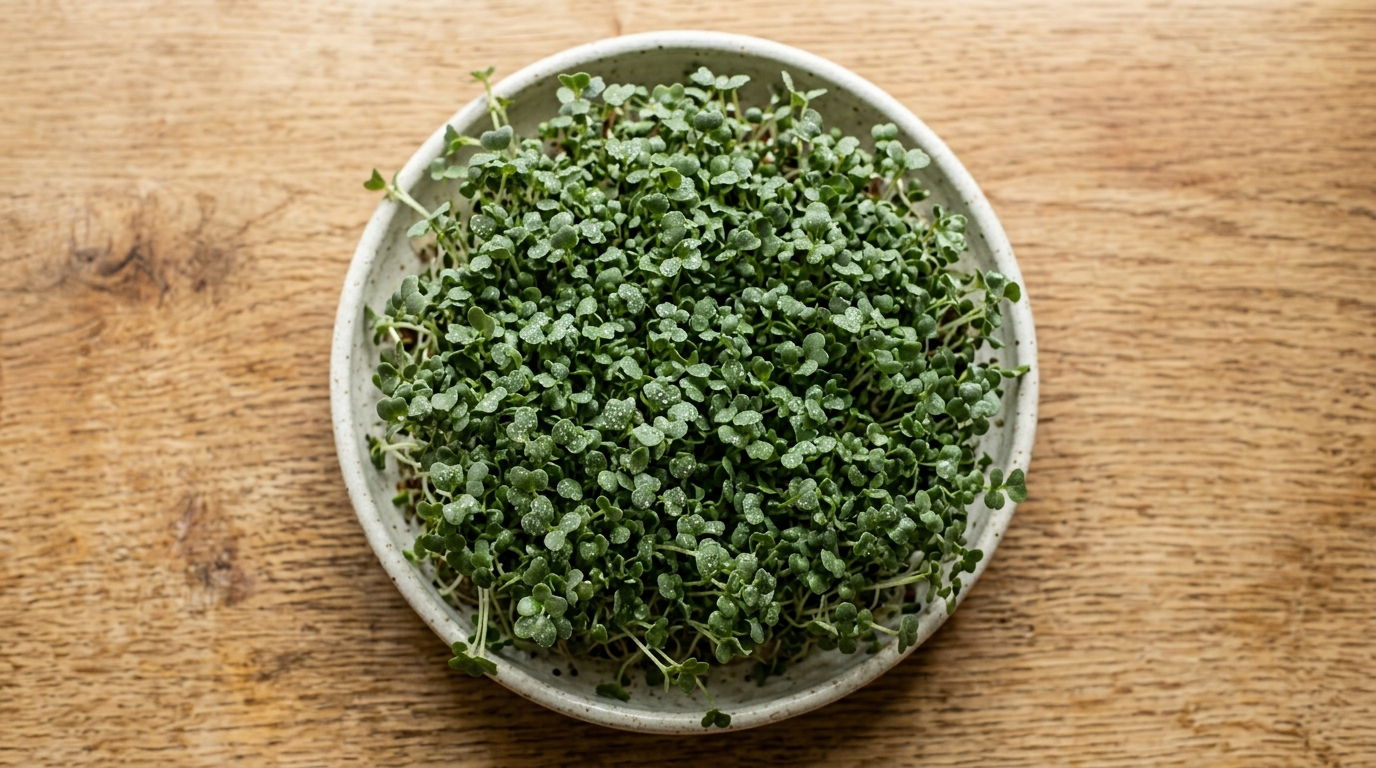
Sulforaphane is a compound found naturally in cruciferous vegetables, with the highest concentrations in broccoli sprouts. It was first isolated in 1992 at Johns Hopkins University by researchers Zhang, Talalay, and colleagues, who identified it as the most potent natural activator of a cellular defense pathway called Nrf2 (Zhang et al., 1992).
Sulforaphane is a naturally occurring compound that activates your body's Nrf2 pathway, triggering the expression of over 200 protective genes involved in cellular defense and detoxification. It is classified as an indirect antioxidant because it amplifies your body's own defense systems rather than replacing them.
Here's what that means in practice:
- Nrf2 activation: Sulforaphane flips on your cells' master defense switch, a pathway that controls the expression of over 200 cytoprotective genes, which produce the enzymes that defend your cells
- Phase II enzyme upregulation: These enzymes convert fat-soluble toxins into water-soluble compounds your body can eliminate through urine, bile, and sweat
- Indirect antioxidant action: Unlike vitamin C or E, which neutralize free radicals one molecule at a time, sulforaphane triggers a cascade. One molecule activates the production of thousands of enzyme molecules that keep working for days
Think of it this way. Direct antioxidants are like using a bucket to bail water out of a boat. Sulforaphane is like fixing the hull. It works with your biology, not as a replacement for it.
The Nrf2 pathway itself is elegantly simple. Under normal conditions, a protein called KEAP1 keeps Nrf2 locked down and tagged for destruction. The defense switch stays off. When sulforaphane enters the picture, it modifies KEAP1 so it can no longer suppress Nrf2. Nrf2 is freed, enters the cell nucleus, and activates an army of protective enzymes: GSTs (which conjugate toxins with glutathione), NQO1 (which processes reactive compounds like benzene metabolites), and UGTs (which handle the elimination of chemicals like BPA and phthalates through glucuronidation).
This is why researchers have been studying sulforaphane for over 30 years. It doesn't just do one thing. It activates a master regulatory system that does hundreds of things. This is the foundation of cellular defense.
What the Research Actually Shows
Let's talk evidence. Not theoretical mechanisms, not cell studies, not mice. Human clinical trials.
The landmark study is Egner et al. (2014): a 291-person randomized clinical trial conducted in Qidong, China. Participants who consumed a broccoli sprout beverage daily showed a 61% increase in benzene excretion and a 23% increase in acrolein excretion. These effects began on day one and persisted throughout the 12-week study. A follow-up trial (Chen et al., 2019) confirmed these results were dose-dependent: more sulforaphane produced proportionally greater detoxification.
These aren't small pilot studies. A 291-person RCT with measurable, dose-dependent outcomes is the kind of evidence that moves the needle.
On the exercise front, Rodriguez et al. (2025) found that sulforaphane combined with exercise produced 2.1-fold Nrf2 activation compared to 1.5-fold for either alone. An important caveat: the sulforaphane in this study was applied to blood cells outside the body (ex vivo), so this is not a simple "take a pill and work out harder" result. But it does suggest that sulforaphane and physical activity may activate the same pathway in complementary ways, and unlike high-dose vitamin C or E, sulforaphane does not appear to blunt exercise adaptations.
The research goes well beyond detoxification. A 2025 comprehensive analysis (Saito et al., Journal of Nutritional Science) counted 84 registered clinical trials examining sulforaphane across inflammation, cognitive function, blood sugar regulation, and more, with 39 published to date. For a single dietary compound, that depth of clinical investigation is rare. The evidence base is real, substantial, and still growing. We'll go deeper on the Nrf2 pathway and what it means for cellular defense in a future post.
The Problem With Most Sulforaphane Supplements
Here's where it gets frustrating.
Most sulforaphane supplements on the market quietly fail to deliver what they promise. The reason comes down to chemistry.
Pure sulforaphane is unstable. When extracted alongside other organic plant material, it reacts with that material and gets destroyed or becomes biologically unavailable. Independent testing has repeatedly shown that supplements claiming to contain sulforaphane often have little to none of the active compound.
Then there's the labeling problem. Many products print "sulforaphane glucosinolate" on their labels. This sounds like sulforaphane. It is not. Sulforaphane glucosinolate is actually glucoraphanin, an inactive precursor that must be converted by an enzyme called myrosinase before your body can use it. This mislabeling is the #1 consumer complaint in the category, and it's not an accident. It's a marketing choice that exploits the fact that most consumers don't know the difference.
The gold standard for sulforaphane bioavailability is fresh broccoli sprouts (30-40%), but they're far from practical. They require a 3-5 day growing cycle, twice-daily rinsing, careful mold management, and offer no dose standardization. There is also a known food safety risk: sprouts have been linked to E. coli and Salmonella outbreaks. For most people, a well-formulated supplement is the more realistic option. For the full head-to-head on what each actually delivers, see our honest comparison of broccoli sprouts vs. supplements.
Here's how the main delivery forms compare:
| Delivery Form | Bioavailability | Practical? | Key Limitation |
|---|---|---|---|
| Fresh broccoli sprouts | 30-40% | No | Mold risk, no dose control, food safety concerns |
| Glucoraphanin alone | 5-19% | Yes | Relies on gut bacteria, wildly inconsistent |
| Glucoraphanin + myrosinase | 20-40% | Yes | Requires proper co-formulation |
| Stabilized sulforaphane | ~70% | No | Requires refrigeration, limited availability |
So what about supplements? If you take a glucoraphanin supplement without myrosinase, you're relying entirely on your gut bacteria to make the conversion. Research shows this is wildly inconsistent, anywhere from 5% to 19% bioavailability depending on your individual microbiome (Mastaloudis et al., 2026).
The smarter approach, supported by clinical research, is co-formulating glucoraphanin with exogenous myrosinase from mustard seed. A 2026 randomized crossover trial (Mastaloudis et al., Scientific Reports) found this combination produced 39.8% bioavailability versus 18.6% for glucoraphanin alone. It effectively doubled conversion, bringing supplement bioavailability close to what you'd get from fresh sprouts.
What to Look for Before You Buy
If you're evaluating sulforaphane supplements, here are the questions worth asking.
Does it contain glucoraphanin with co-formulated myrosinase? This is the formulation approach the science supports. Look for both ingredients listed explicitly on the label. If a product lists only "broccoli seed extract" with no mention of myrosinase, you're depending entirely on your gut for conversion.
Is the glucoraphanin content standardized? Look for a specific milligram amount on the label. Clinical studies have used doses delivering 20-40mg of bioavailable sulforaphane per day. If the product includes myrosinase, 50-100mg of glucoraphanin should get you into that range. Without myrosinase, you'd need significantly more, and your results will vary depending on your gut microbiome.
Does the label say "sulforaphane glucosinolate"? That term is misleading. "Sulforaphane glucosinolate" is actually glucoraphanin, a precursor, not sulforaphane itself. Glucoraphanin is the right starting ingredient when paired with myrosinase for conversion. The problem is when brands use this term to imply you're getting sulforaphane directly. A transparent label will list glucoraphanin by name, specify the amount, and tell you whether myrosinase is included.
Is there third-party testing? No sulforaphane brand currently carries NSF, USP, or ConsumerLab certification. That's a gap in the entire category. At minimum, look for published batch Certificates of Analysis (COAs) that verify potency and purity.
What about side effects? Sulforaphane is well-tolerated across dozens of clinical trials. The most common side effects are mild gastrointestinal symptoms (gas, bloating) at higher doses, and these tend to be self-limiting. Capsule formulations are generally better tolerated than sprout-based beverages.
Is it safe to take sulforaphane every day? Yes. The clinical trials referenced in this post used daily dosing over periods of 12 weeks or more with no significant adverse effects. Sulforaphane is not stored in the body, so consistent daily intake is how you maintain Nrf2 activation and keep those protective enzymes working. Most researchers studying sulforaphane take it daily themselves.
Now you know what questions to ask. The supplement industry rewards consumers who do their homework, and it quietly punishes those who don't. In a category where the #1 complaint is misleading labels, the most powerful thing you can do is understand what you're looking at before you buy.
Sources
- Zhang Y, Talalay P, Cho CG, Posner GH. A major inducer of anticarcinogenic protective enzymes from broccoli: isolation and elucidation of structure. Proceedings of the National Academy of Sciences USA. 1992;89(6):2399-2403.
- Egner PA, Chen JG, Zarth AT, et al. Rapid and sustainable detoxication of airborne pollutants by broccoli sprout beverage: results of a randomized clinical trial in China. Cancer Prevention Research. 2014;7(8):813-823.
- Chen JG, Johnson J, Egner P, et al. Dose-dependent detoxication of the airborne pollutant benzene in a randomized trial of broccoli sprout beverage in Qidong, China. American Journal of Clinical Nutrition. 2019;110(3):675-684.
- Rodriguez DJ, et al. Sulforaphane improves exercise-induced NRF2 signaling in older adults. GeroScience. 2025.
- Saito R, et al. Sulforaphane as a potential therapeutic agent: a comprehensive analysis of clinical trials and mechanistic insights. Journal of Nutritional Science. 2025.
- Mastaloudis A, et al. Exogenous myrosinase from mustard seed increases bioavailability of sulforaphane from a glucoraphanin-rich broccoli seed extract. Scientific Reports. 2026.
If this was useful, subscribe to the Guard blog for more science-backed deep dives on sulforaphane, cellular defense, and what the research actually says.